
Have a Story to Share Live with Philly Uncut

Some stories do not sound right when they are polished too much. They need the pause before the hard part. The laugh that breaks the tension. The street noise in the background. The truth in someone’s face when they say, “This is what really happened.”
That is the heart of Philly Uncut.
This is an opportunity for everyday people to share real stories live, in their own words, without the filter that often strips the truth out of personal experience. The story might be about survival, love, loss, growth, rebuilding, faith, fatherhood, motherhood, friendship, prison re-entry, grief, ambition, neighbourhood pride, or a moment that changed everything.
The only real requirement is this: you must have a story, and you must agree to share it live and uncut.
That does not mean careless. It does not mean unsafe. It means honest. It means present. It means the story comes from the person who lived it, not from a script designed to make it sound neater than life actually is.
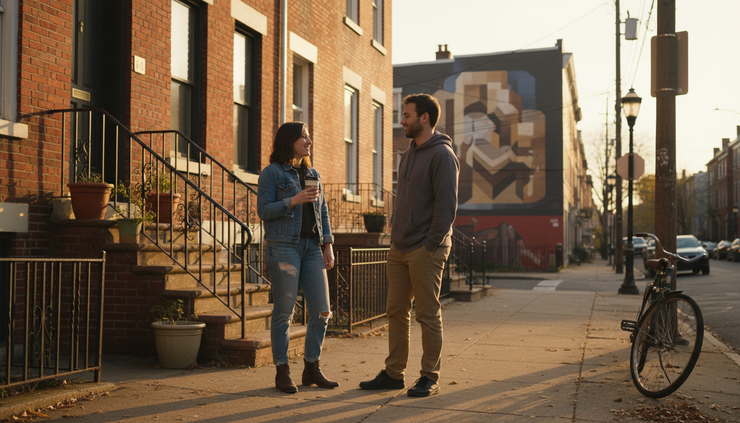
Why live and uncut stories hit differently
A live story has a kind of pressure to it. The person speaking knows people are listening. The people listening know the person cannot hide behind edits, captions, or perfect timing. That shared moment creates something rare.
A video can be cleaned up. A post can be rewritten. A quote can be trimmed until it feels safe. A live, uncut story carries the breath of the person telling it.
That is why it matters.
Think about someone standing outside a corner store in West Philly, talking about the first time they realised they needed to change their life. Or a woman in North Philly sharing what it took to raise children while grieving someone she loved. Or a man from South Philly explaining how a mistake in his twenties shaped the way he moves now.
Those stories land because they are specific. They are not trying to sound like everybody else. They are rooted in real streets, real families, real choices, and real consequences.
Philly Uncut works best when the moment feels human. The audience is not looking for a perfect speaker. They are looking for someone who can tell the truth without dressing it up too much.
That might look like:
A personal turning point
A lesson learned the hard way
A memory tied to a block, school, church, shop, park, or home
A story about starting over
A tribute to someone who shaped your life
A moment when Philadelphia itself played a part
A confession, reflection, or message meant to help someone else
The strongest stories usually have a clear before and after. Something happened, and it changed the way the person saw themselves, their family, their neighbourhood, or their future.
Who can share a story with Philly Uncut
Philly Uncut is open to all men and women who are willing to share a real personal story. You do not need to be famous. You do not need a title. You do not need a huge following. The whole point is that powerful stories often come from people who are rarely handed a microphone.
A person might be a barber, nurse, student, driver, artist, parent, coach, returning citizen, shop owner, retired worker, community volunteer, or someone simply carrying a story that deserves to be heard.
What matters most is consent and readiness.
Before someone appears, they need to understand what live and uncut means. Once the story is shared, it may be heard by people beyond the immediate space. That can be powerful, but it can also feel intense. A person should never feel pushed into telling something they are not ready to say out loud.
A good fit for Philly Uncut is someone who can say:
I understand I am sharing my story publicly.
I agree to speak live and uncut.
I know the story may bring up real emotions.
I am not sharing private details about someone else without care.
I am ready to stand behind what I say.
That last point matters. Some stories involve other people. Some include pain, conflict, family history, street life, or trauma. Honest storytelling should still respect safety, privacy, and the dignity of others.
Being uncut does not mean being reckless. It means the voice stays real.
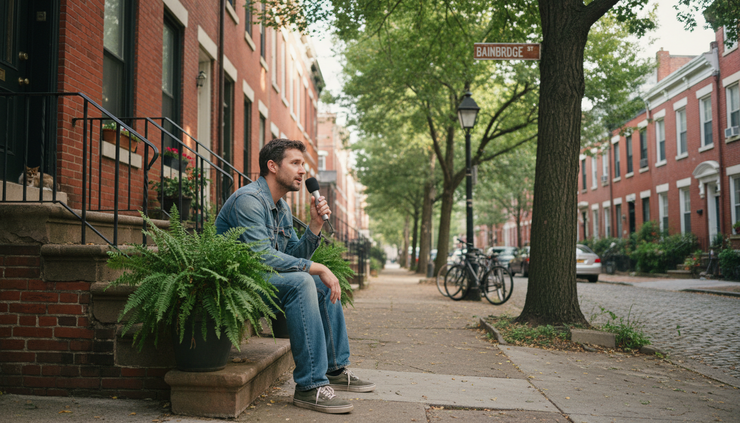
The kinds of stories that connect with the Philly Uncut audience
The Philly Uncut audience will likely connect with stories that feel close to life. Not staged. Not over-rehearsed. Not copied from something trending. The kind of story that makes someone stop and say, “I know exactly what that feels like,” or “I never thought about it that way.”
Here are the types of stories that tend to resonate.
Stories about survival and rebuilding
People respond to stories about making it through something hard, especially when the speaker is honest about the cost. That might be surviving violence, addiction in the family, homelessness, heartbreak, illness, prison, job loss, depression, or being counted out.
The key is not just the hardship. It is what came next.
A story about survival should give the audience something to hold on to. Maybe the message is patience. Maybe it is accountability. Maybe it is a warning. Maybe it is proof that a person can fall apart and still rebuild.
Stories about family and identity
Philadelphia is a city of families, blocks, and roots. Many people carry stories about where they come from and how that shaped them.
A powerful story might focus on a grandmother’s kitchen, a father’s absence, a mother’s sacrifice, a sibling lost too soon, or a family tradition that kept people connected. These stories do not need to be dramatic to matter. Sometimes the quiet memories are the ones people feel most deeply.
Stories about mistakes and accountability
Some of the most honest stories come from people willing to say, “I got it wrong.”
That takes courage. It is easier to blame the world than admit where things went off track. But when someone can talk about their choices, the damage caused, and the work of changing, the story can reach people who are standing at a similar crossroads.
Philly Uncut does not need perfect people. It needs real people who can speak with truth.
Stories about love for the city
A story can also be about Philadelphia itself. A block that raised you. A playground that kept you grounded. A corner that taught you caution. A school that gave you confidence. A mural that reminds you of someone. A cheesesteak spot, rec centre, church basement, basketball court, or front step where life happened.
The city is more than a backdrop. For many people, Philly is part of the story.
A true-to-life example of the kind of story that fits
Picture this.
A man named Marcus stands near a rec centre where he spent half his childhood. He is not dressed up. He is not reading from a paper. He looks at the camera, then looks down the block for a second because the memory is still sitting there.
He starts with a simple line.
“I used to come here when I had nowhere else to go.”
Then he talks about being 14 and angry. About a coach who noticed he had not eaten. About getting into trouble anyway. About disappearing for a while. About losing a friend. About becoming a father and realising his son was watching everything he did.
The story is not clean. He pauses. He laughs once at the wrong time because the pain catches him off guard. He admits he ignored good advice. He says the rec centre did not save him by itself, but it gave him one place where somebody knew his name.
Then he says why he came back.
“I wanted the young ones to see you can come back to the place where you messed up and still do something good.”
That is a Philly Uncut kind of story.
It has place. It has truth. It has regret. It has a message. It does not pretend the past was simple. It gives the audience something real.
Philadelphia locations that can work for live features
The location matters because it can add meaning to the story. A live feature should not happen just anywhere. The place should feel connected, safe, and practical for recording.
Outdoor locations are often a natural fit because they carry the sound and movement of the city. Indoor locations can work too, but indoor spaces must be pre-approved before any live feature happens.
Here are some Philadelphia settings that could work well.
Neighbourhood blocks and row house stoops
A front step can say a lot. It can hold memories of family talks, summer evenings, arguments, reunions, and quiet decisions. For many Philly stories, a stoop is not just a place to sit. It is part of the memory.
A residential block may work well when the story is personal and rooted in home life. Permission and respect for neighbours matter. The goal is to capture the truth without turning someone’s block into a scene.
Parks and open public spaces
Places like Fairmount Park, Clark Park, Malcolm X Park, Penn Treaty Park, and other public green spaces can offer room to breathe. These locations can work for stories about reflection, healing, family, grief, or starting fresh.
Parks also allow a speaker to feel less boxed in. That can help when the story is emotional.
Murals and public art locations
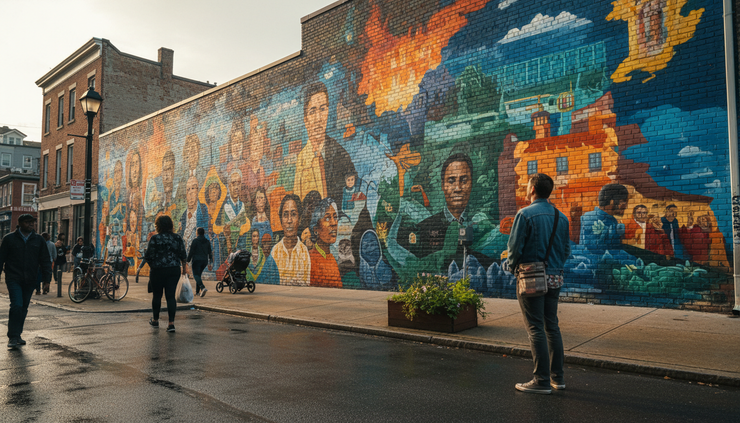
Philadelphia’s murals often carry messages about memory, justice, culture, and identity. A mural can be a strong visual setting when it connects to the story being shared.
The background should support the speaker, not overpower them. A story should never feel like it is competing with the location.
Recreation centres and basketball courts
Rec centres, gyms, and courts are tied to many stories in Philly. They can represent discipline, escape, childhood, mentorship, competition, and community.
Outdoor courts may be easier for live features. Indoor rec centres or gyms must be cleared in advance with the proper people.
Barbershops, salons, cafés, and small local spaces
Some stories belong indoors. A barber chair, salon seat, or café table can create a comfortable setting, especially for conversations about identity, friendship, work, or neighbourhood life.
But this is where approval becomes essential. Any indoor location needs permission from the owner or organiser before filming. The space should also be suitable for sound, safety, and privacy.
Churches, community halls, and support spaces
Some personal stories are tied to faith, recovery, service, grief, or community care. Churches and community halls can be meaningful, but they must be handled with respect.
If the story involves a sensitive group or support setting, approval is not optional. People in the background should not be exposed without consent.
What live and uncut should mean in practice
“Live and uncut” sounds simple, but it needs clear boundaries.
It means the story is shared in the moment, in the speaker’s own voice. It means the audience sees the real emotion and natural rhythm of the conversation. It means the rough edges stay in.
It should also mean:
The speaker agrees before going live.
The location is suitable and approved when needed.
The story does not put someone in immediate danger.
Private information is handled with care.
The person sharing knows they can keep some details to themselves.
A live story can still have preparation. In fact, the best live stories often come from someone who has thought seriously about what they want to say.
Preparation does not mean memorising every word. It means knowing the heart of the story.
A simple way to prepare is to answer three questions:
What happened?
How did it change me?
Why am I sharing it now?
If those answers are clear, the story has a strong foundation.
The impact of sharing personal stories in community
When someone tells the truth in public, it can shift the room. Or the block. Or the comment section. People who felt alone may realise their experience is not rare. People who judged from a distance may hear the human side. People who never had the words may borrow someone else’s courage until they find their own.
That is the real power of personal narrative.
A live Philly Uncut feature can do more than capture content. It can create a community moment. It can give people a chance to listen across age, gender, background, and neighbourhood lines.
A young person might hear a warning before making the same mistake. A parent might feel seen. A returning citizen might feel less erased. A survivor might feel believed. A neighbour might understand the person they have passed for years without ever really knowing.
A story shared honestly can become a bridge between people who thought they had nothing in common.
That does not mean every story has to teach a lesson. Some stories simply need witness. Some need to be spoken because silence has carried them for too long.
Still, the best community storytelling leaves people with something. A question. A memory. A reason to call someone. A reason to forgive. A reason to keep going.
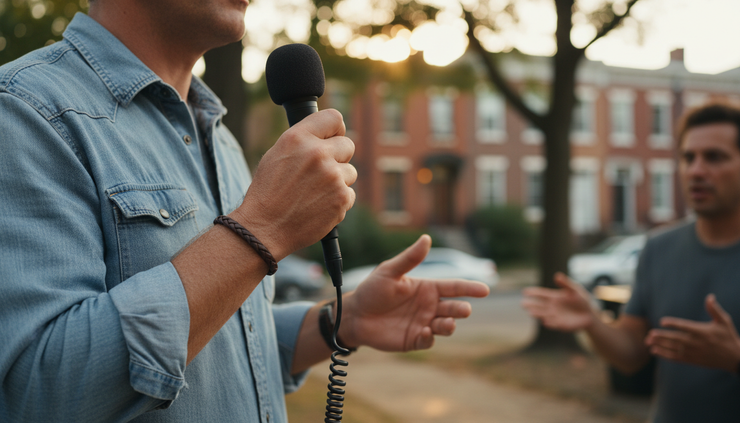
How to know if your story is ready
Not every story is ready for a live audience. That is not a weakness. Some stories need time. Some need support. Some need privacy.
A story may be ready if you can talk about it without feeling forced to share details you want to protect. It may be ready if you understand why you want people to hear it. It may be ready if the message matters more than the attention.
Before stepping into a live feature, it helps to think through a few things.
Know your boundaries.
Decide ahead of time what names, places, or details you will not share.
Choose the right setting.
Pick a place connected to the story, but also safe and practical.
Be honest about emotion.
It is fine to cry, pause, laugh, or take a breath. That is part of being human.
Respect other people’s privacy.
Your story may include others, but they still deserve care.
Make sure indoor spaces are approved.
If the feature is inside a shop, church, hall, home, rec centre, or private venue, get approval first.
Most of all, remember that uncut does not mean unprepared. It means the story stays true.
The invitation is simple
Philly is full of stories. Some are loud. Some are quiet. Some have been told at cookouts, in barbershops, on front steps, at funerals, in group chats, or during long rides home. Some have never been spoken outside one person’s own mind.
Philly Uncut creates space for those stories to be shared live, with honesty and presence.
All men and women with a real story can take part, as long as they agree to share it openly and understand the live, uncut nature of the feature. The story can be joyful, painful, funny, reflective, raw, or redemptive. What matters is that it is yours to tell.
Choose a place that means something. Speak with care. Bring the truth. Leave the polish at home.
The city has always had voices. Philly Uncut is one more way to let them be heard.

Comments